Keeping Up Appearances

A few weeks ago the Honourable Member for Brent Central was temporarily banished from the Chamber for refusing to comply with the required rules of etiquette. 

A bit like being sent to your room for calling your elderly relative fat. . .  Or perhaps not; for that’s more a matter of opinion, of kindness and compassion and, indeed, of etiquette. This was altogether different, more akin to breaking the sumptuary laws once employed to keep us in our respective places. After all, there’s a charade to be maintained; a pretence to distinction and honour. . .

I believe Ms Butler was otherwise entirely appropriate in her behaviour. As far as I can tell, she didn’t characterise the the Prime Minister as a liar, but simply observed that he had lied; repeatedly; and she furnished the necessary evidence. A demonstrable statement of fact which was, apparently, widely acknowledged.

Nonetheless, she hadn’t played the game – a failure, as she noted, far more reprehensible than merely misleading the public. Never mind that we can all see through the Emperor’s new clothes, the myth must be preserved. 

But why persist with the masquerade? 

Well probably, and despite the fact that this is a particularly silly example, because it’s the human (and the British) way. Let’s face it, we still populate our establishment with all that vestigial panoply of a moribund hierarchy. Lords and ladies, barons, earls and all the rest: ersatz distinction founded upon privilege and patronage. An apparent need to cement the edifice with sustaining accolades and divisive eminence.

There’s an emotional commitment to tribal consensus and hierarchy, to conformity; security in an embrace of the familiar. Indeed, anything to avoid the latent perils, the uncertainties that might be released through an open mind with clear and critical thought. There’s risk in confronting reality – blinkered complacency is so much safer. Keep your head down and play along for an easy life. 

So we turn a blind eye to the Emperor’s exposure and indulge his need for adulation, power and dominance. Some in the crowd might struggle with the deception, but they, and those who blurt out the obvious, will be sidelined by a deferential inertia that maintains the reassuring hegemony. Lip service the order of the day.

Too many are invested in the status quo – the Emperor and his cohorts are well served. Sufficient suspension of reason affords a refuge for despotic authority. Mere declaration gains proxy for coherence and logic. Dominion is wrapped in protocol and procedure; threat and penalty keep challenge at bay.

Some years ago now, I had occasion to write to a firm of lawyers in Scotland. They had, on behalf of their client, performed a particularly cruel and vicious attack on a close friend. The action was groundless and though ostensibly intended to achieve some slight territorial advantage was perhaps equally designed to assuage the burden of a fragile ego. The method employed was to intimidate with entirely fictitious allegations and thus create a paralysing sense of fear and alarm. In this state, and lacking the resources to challenge, the only option was for my friend to concede an agreement. With threats of unsustainable expense and even imprisonment, she was bullied into compliance.

I wrote because amongst the numerous unfounded allegations were various misrepresentations and erroneous and incoherent statements of fact for which the lawyer could not evade responsibility. Most astonishing was an undisguised misrepresentation of the proper reading of a Title Plan. But, needless to say, there was a refusal to engage with any issues and simply a bland assurance that neither practitioner nor firm would ever deliberately mislead the court. . .

There’s no mechanism for challenge other than playing their game – if you have the means! Scottish Legal Complaints subscribe to the same page (when they get around to it); offering an assortment of straw men pressing incompetent rationale and logical fallacy to burnish an evident predisposition. No resort then, other than the Court of Sessions (which comes with a warning of more expense). So no redress; no real scrutiny. A parasitic institution all wrapped up in its own terms with a degree of power out of all proportion to any accountability.

Without vigilance the essential institutions of civilised existence so easily succumb to inertia and personal ambition. There will always be those looking to profit at the expense of others and the challenge is to design out any opportunity for toxic hierarchy. But vigilance is the key; and a willingness for those with the authority and means, to put aside narrow self interest for the wider good and acknowledge and act upon emergent shortcoming. Silence is betrayal and complicity in the chaos; it just promotes the pantomime.

And there are examples:

In Scotland houses for sale come with the Single Survey; an overview of the condition of the structure. When the survey seems to have overlooked several shortcomings, there’s naturally an element of dissatisfaction. Of course, remedial action can be taken to resolve the issues – but that’s not the point of the story.

A typical timber frame structure with a rendered masonry veneer – the intervening cavity requires an airflow to guard against fungal decay. There is, therefore, a requirement for external vents to be fitted throughout the envelope. It becomes apparent, however, that these vents are often treated as no other than cosmetic embellishment. They appear simply to be pushed into previously buttered mortar joints and then further compromised by render and paint. 

When such a matter, along with other issues, was taken up with Building Control, the firm of surveyors, and subsequently the Ombudsman, it produced a variety of (written) response:

Building control emphasised the importance of maintaining ventilation even in exposed locations and quoted the relevant technical standards. The RICS surveyor, however, claimed an official policy that didn’t require vents in exposed positions. Finally, the Ombudsman characterised this clear discrepancy as merely a “shortfall in reporting”. 

A cursory observation would suggest it is not unusual to find properties in the area fitted with non-functioning vents. Why fit vents if not required, and only to cover them? Why characterise a significant conflict of advice as just a reporting shortfall? It’s this deficit of rigour, this casual indifference for veracity, that can and does bring disaster. 

And, without labouring the issue, what of a Land Registration regime (Scotland) that would seek to discharge a statutory duty to define the boundaries to every registered plot by means of a shifting base map subject to regular updates? Or the Crofting Commission, similarly imposing definitive dimensions to Croft Lands? Yes, there are procedures and conventions to mitigate the difficulties but even a brief acquaintance with the purchase of property in these areas reveals the clear scope for conflict and legal intervention. Legislative ineptitude benefiting none but the legal community.

And there’s the frustration; having to contend with the inane and self-serving nonsense so often substituted for reason and sound governance. But why say what you mean when a euphemism is more palatable? Why tell the truth when you might get away with a convenient lie? Why struggle with reality when the facade is so much more beguiling? After all, Intellectual rigour is really quite tedious and can be such an inconvenient impediment to more immediate gratification.

I won’t speculate as to chicken or egg but the adversarial and litigious legal system is so well accommodated, it is difficult to see it as other than central to our increasingly dysfunctional society. All the complex and nuanced needs for justice exploited by a facile game of winners and losers. A business model that cares little for facts or fairness; that peddles cover-up over clarity; scapegoat over authenticity; and, in condemning candour, denies us all the opportunity to learn and grow. Opportunistic deceit is becoming a cultural norm and, as has been noted (for millennia), whenever dissembling becomes the order of the day, pursuit of truth and reason just courts vilification. 

So don’t fall prey to the snake oil salesman; even if he appears to believe in his product you don’t have to swallow it down. Face the facts; put it to the test; think for yourself. And let’s call a lie a lie; Members who dissemble and mislead aren’t honourable and do us all a disservice. But it seems we have become inured and there appears now almost an acceptance, an expectation, of the underhand.

Nevertheless the mechanisms of democracy are, by all accounts, still in place; so exercise your rights. That single vote is the only lever available to many, the only chance to be heard however slight. And don’t squander on tribal loyalties; look beyond the charades, dismiss the fairy tales, see things as they really are and don’t indulge those who would abuse their privilege and neglect their responsibilities, otherwise we’re all lost.

We are facing existential threats on an unprecedented scale. Pandemic; climate change; totally unsustainable demands on the earth; and we waste time and energy on partisan posturing; demands for independence when we have never been more interdependent; allegiance to arcane difference furthering neglect of the common humanity. Survival takes more than defensive rhetoric, or hubris and grandiose aspiration. The challenges are too big for play-acting and make-believe.

And so, let us prey. .

Let us prey on the gullible and the vulnerable,

let us prey on those who search for meaning.

Let us fill their minds with guilt and fear,

but offer the promise of redemption and salvation.

For blind obedience and complicity will relieve them of any need to think for themselves.

And their devotion will bring forth comfort in divine delusions of immortality and eternity.  

Or, indeed, any delusion you care to mention,  

or we can sell you,

but don’t expect your money back.

‘This statement is untrue’

This post has been delayed for a couple of reasons, one of which should be evident from the text. I was also hoping to illustrate the words with three reproductions from the works of M C Escher. I applied to the M C Escher Co. (which apparently holds the copyright) for permission and had been awaiting a response. Permission, however, was eventually denied; “due to existing license-agreements”.

It is, of course, an interesting area in itself and one I’ve touched on before – an aspect of the commodification of human endeavour which can work both to incentivise but also to control and deny access. On this occasion the restriction is of little moment and I shall simply identify the relevant points. All the images are probably quite familiar and, for anyone interested, readily found on-line.

The latter two might both be considered iterations and developments of the “Penrose staircase”- a close relative of the “Penrose triangle”. That “impossible” figure, in fact, has a considerable provenance – most commonly first attributed to Oscar Reutersvärd in 1934 but continuing a tradition of ambiguities and perspectival incoherence stretching back through Hogarth, Piranesi and beyond the Renaissance.

This image lies, I believe, in the public domain and is not subject to copyright constraints; although, interestingly, I understand the development of a set of digital instructions for a 3D print has given rise more recently to claims of a copyright infringement.

My purpose with the illustrations was simply to capture the elusive nature of a truth and to demonstrate the perilous futility of assembling apparently valid details, but with little regard for the coherence of the whole.

The post follows:


‘This statement is untrue’

An unembellished iteration of the “liar paradox”. The words enjoy a syntactical legitimacy but generate a semantic disquiet. Of itself, a valid utterance but, as with the drawing hands above, it’s the self-referential narrative that leads to a paradoxical disjuncture.

Now, I have no grounding in theories of logic, I can claim no formal insights to accommodate the unease. I’m just aware that the words and images, entirely sensible within their own disposition still contrive a denial of reason. They maintain a robust absurdity that would defy an infinity of improbabilities. They define their own demise and confound the reassuring certainties with an unsettling ambiguity.

Perhaps among the more familiar of Escher’s illustrations is the image of monks trudging endlessly up or down steps; but getting nowhere. Every tread, every riser leads legitimately and inexorably forward and up or down. But the totality of all that effort is not in the sum of the parts. The climbers end up where they started. The narrative finds us at a loss; delivered of a destination that seems to betray the fundamental tenets of sensible existence. Therein lies the disquiet.

In “Waterfall” the water flows from the base of the fall, through a series of channels, back to the head – and down the fall again. There’s an inherent dismay in confronting a series of apparently reasonable steps that usher in an untenable conclusion. As if one is parted from the anchoring certainties that hold us safe in a viable reality. 

Some fifteen years ago I suffered a cerebellar stroke. After a stay in hospital I was sent home in a wheelchair and with a zimmer. Several months later I had recovered sufficiently to resume my life.  Eventually I had the good fortune to regain a functional normality without significant impairment. A few weeks ago I found myself in A&E again, following an event which felt unpleasantly similar to the onset of that previous experience. I won’t speculate on the cause of this occurrence and any residual effects have been, thankfully, minimal. It was, however, a salutary reminder. The sense of reality in retreat – a growing and frightening realisation that something has gone very wrong. 

On that first occasion, and over a period of about thirty minutes, I suffered a strangely changing and deteriorating sense of awareness accompanied with a gradual loss of any ability to do other than lie in a heap on the ground. My legs had turned to jelly! For several days then I didn’t open my eyes because I couldn’t make sense of anything I saw. Muscle control, balance and spatial awareness; all were gone. I still somehow knew myself but, for the moment at least, the world had been taken from me.

For months afterwards I would awake in the early hours with the certain and terrifying sense that only the merest chimera holds me from the brink; alone in a pervading darkness; the solid reality no more than an illusory assemblage of rational devices to see me through the void. 

It’s a space that we populate with perceptions; discretely and intimately enmeshed within the machinery of logical thought. Indeed, logic describes the essential metric by which to know and navigate the conscious existence. Escher exposes the unreliable mechanisms. The strange loops, logical steps to an irrational destination, the figure and ground dilemmas – all the turning cogs and wheels which can exhibit such an apparent failure to engage.

The liar paradox has, in one form or another, quite a history; logicians, mathematicians and philosophers have all confronted the conundrum. And lacking their contextual insights I can do no better than any other empiricist in the street (never forgetting that the street is found in the mind) in addressing the challenge. Still, in exercising my uneducated introspection I found some encouragement in a claim by the logician and philosopher, Arthur Prior, that every statement includes an implicit assertion of its own truth. He develops his argument and seems to conclude that there need be no paradox. I’m in no position to comment on his reasoning. 

However, I have long been troubled by the need to find myself an adequate justification for a belief in the fundamental and indispensable role of truth – in the sense of logical coherence. It seems that herein lies a solution. Sanity seems to reside in the sensible accommodation of a perceived reality – a product of experience and shared conformity, self and others, with agreed patterns of causality and conduct. Insanity lurks behind a denial of reason in a place that takes leave of the senses, a place that doesn’t compute. 

Of necessity there are rules, structures. Untrue and meaningless statements contribute nothing, they’re the defective blocks that jeopardise the integrity of the whole. They have no validity. They undermine the ordered and vital illusion and deliver us to the chaos and darkness without. So, in this sense – recognising the invalidity of the statement – I too might dispense with the paradox.

Of course you don’t have to suffer a stroke to be cast loose. There’s no shortage of individuals more than ready to relieve you of any assurance that reason might prevail. For some there’s a perceived advantage to be won; for others, just a nice little fee. These individuals inhabit a territory peculiarly suited to those that would impose, exploit and dominate. The law, politics, media – all offer ample opportunity to tinker with the machine in the service of a competitive edge

But whether one’s stake in the world is confiscated through medical emergency or malicious connivance, for those beset by such misfortune, the consequences remain remarkably similar. A rudderless sense of dismay; nowhere to turn; disbelief turning to icy fear and despair. Total isolation in the void; all points of reference lost; a surrender of self. 

Our survival, individually and as a species is inescapably bound within the reality we inhabit. It’s a reality built on the logical integrity of our perceptions and cognition. Those who dispense with truth undermine the foundation. They chip away at the branch on which we all perch, and when it breaks I fear that those who count on a divine safety net might well be disappointed. . 

I believe I read somewhere that the artist noted the need to add a little water from time to time to compensate for any loss due to evaporation and to thus maintain the flow. . .

Perhaps there’s a word to describe the preoccupation with an arcane detail of a fabric that is otherwise fatally flawed?

I started to write these posts intending to explore and expose the background to a series of events which has caused such distress to a friend. I thought to better understand and perhaps assuage something of the dismay that I felt. 

Well, I’m not sure how watertight all of this is, but I’ve gained some insights; clarified my understandings; and sadly, compounded the dismay. As I’ve looked closer, I’ve had to acknowledge that behaviour I might have once considered aberrant seems to be developing into a cultural norm. In truth you don’t have to look too closely – politicians who speak arrant nonsense or outright lies with practised ease and, sometimes, great panache. Lawyers who knowingly condemn innocents, or impose NDAs to conceal inconvenient truths. Politicians buoyed on the indiscriminate tribalism of their voters. Lawyers at the lucrative behest of their clients under the flaky indemnity of “professional ethics”. 

 It’s not just the deliberate untruths but the careless disregard for any coherent rigour in confronting issues. Instead, there’s a preference for facile conformity to established patterns, prejudice and perceived advantage and success. To many it might appear naïve to question the morality – “get used to it, this is how things are”. And there will always be those who tout a beguiling incoherence in the service of personal ambition – it’s the natural instinct to survive and thrive.

But we entertain the nonsense at our peril. Acquiescence or indifference simply enables the spread of the pathology. It’s a tacit embrace of the void. It’s an open door to those who would evade, deceive, and spread misinformation. They say there’s a growing mental health issue? If we’re to discard the essential precepts of rational thought that seems entirely plausible. If truth is reduced to a transactional pragmatism there can be no trust, no justice, no reason. We’re left floundering; at the mercy of those who, parading their cohorts of straw men, will merrily lead us, step by step, to a nihilistic oblivion.

Finally, a version of those stairs standing in the public domain but, nonetheless, promising no more than a futile one-upmanship.

An uncertain future


Sentencing the woman to life imprisonment, the presiding judge, according to the Independent, said: “The plain facts of the matter is that you have taken the lives of two vulnerable and defenceless babies.” 

For a woman who has lost her two babies in an appalling turn of fate, what could be a more crushing and condemning statement – a final, utterly cruel, twist of the blade? 

There’s a troubling subtext to such unequivocal condemnations. A process has concluded in a finding – no more or less. Our processes are inevitably flawed and subject to error; human intellect frail and easily misled. There’s a gratuitous and self-righteous arrogance in the ease with which we seek to tidy away the fraying edges – any reassuring narrative will do.

On this occasion, the plain fact of the matter was, that there were no plain facts offering conclusive proof. In actual fact the only substantive evidence indicating innocence had been overlooked. Rather, and however well informed, there was merely assumption, opinion and dubious inference.

The woman endured three years of imprisonment and emotional abuse before being released on a second appeal. Within four years she had died. The case is well aired in the public domain, and it feels unnecessary and inappropriate to dwell on the individuals and personalities involved. This was a terrible tragedy for all concerned and, with recent experience, I can to an extent share in the sheer disbelief and utter despair which confronts those abandoned to mindless denunciation. There is nowhere else to turn when the institutions of state fall prey to human frailties. A shocking realisation that there are no grown-ups keeping an eye on things and all we have are the games we play. 

I wouldn’t presume to comment on the medical discoveries. It’s the journey from these factual observations – some consistent with, even indicative of, maltreatment; but equally, not inconsistent with alternative explanations – to formal and unreserved vilification as a child killer with commitment to life imprisonment, that troubles me. This is a destination reached, as was so well illustrated, by way of a course lined with the pitfalls and traps endemic to human perception; the lure of a destination so strong that even the exalted brightest and best will fall prey. 

A good starting point might be the jury. The final decision left to the impartial deliberations of twelve of your peers. An unrealistic expectation of equitable outcome – every juror carries an inevitable burden of bias, is subject to group behaviour dynamics which favour conformity and quite conceivably is as susceptible to logical fallacy as were, on this occasion, so many of the protagonists.

There’s also little expectation that any is equipped to assess the validity of the medical facts and findings. Indeed, there are sound arguments to exclude such extraneous expertise, Consequently any conclusion will primarily rest with the assumptions and deductions as presented and so coloured by delivery. On this occasion an expert witness for the prosecution employed a particularly compelling analogy from the horse racing world to (erroneously) demonstrate the extreme odds against the deaths being attributable to other than culpability. Anecdotally this vivid and accessible device was a persuasive factor in a majority finding of guilt.

Perhaps a jury should have access to detached guidance on logic and reasoning? Surely an essential capability for sensible decision making? A clarity of understanding untainted by the adversarial thrust and parry within the courtroom could only improve the quality of outcome and might well have prompted some more searching consideration here.

Of course, there’s little scope for a jury when evidence isn’t available. It was the discovery of inexplicably withheld bacteriology test results showing a presence indicating natural causes that prompted the second appeal.

But before this, and rejected at the first appeal, there was recognised disquiet from various sources in regard to the statistical reasoning which presented such a damning case for guilt.

These originated with a professor of paediatrics – a highly respected expert witness for the prosecution. His involvement with a study underwrote a contention as to the statistical probability of natural cot death in a particular profile. Although the finding for one instance is open to some question, it was his extrapolation to the extremely unlikely chance of two in one family, illustrated with the colourful analogy, that caused such concern. Without demonstrable independence, the chance of a second event is arguably more probable and certainly not to be calculated by squaring the chance of the first.

This fairly obvious fallacy was compounded by several deficits of reasoning. Most importantly; if a particular ground for innocence is found to be unlikely, the alternative does not automatically default to guilt. The probability of a particular explanation is not the probability of innocence although it might well have appeared that way to the jury. It is also meaningless without a comparative calculation for the probability of guilt. Finally, the incidence for a group is not necessarily a predictor for a particular instance.

These are recognised errors of reasoning and understanding which may well have contributed to the Home Office pathologist changing his finding of natural causes for the first death, to one of murder in the light of the second. A change of mind apparently due to other than purely medical grounds. I gather that it was this individual who failed to disclose the bacteriological findings.

All this might be seen as a failure of the defence to alight on and exploit the errors. But even if identified, the adversarial context would tend to reduce the credibility of any argument as simply partisan parry. It remains the case that the trial judge and three appeal judges allowed this woman to be condemned in circumstances that shared elementary errors with counsel, witnesses, and jury.

 So what’s the point of all this? The issues are extensively analysed in numerous articles. But that’s just the point; the failings and errors this time were acknowledged. We’re all human and, for all their distinction, even a whole cohort from the top shelf can jointly succumb to basic failings. So how many other errors pass unseen, concealed beneath a deference to eminence and dogma?

The pressures to conform, preconceptions, insecurity, a need for domination, status; all may conspire to cloud clarity of thought. It’s inevitable, it’s what we are; and it’s something we could more readily recognise. Expertise is not necessarily transferable, eminence no elixir for infallibility – we’re all prone to human error and could temper determinations with more humility.

So the judge condemns and we all feel safer; a monstrous scapegoat has been identified, blame has been apportioned, the danger is locked away. A little comforting schadenfreude for the self righteous. A reassuring distance from the “other”. But guilt or otherwise, we’re all complicit and all have a complacent hand in the tragedy.

As long as we insist on simplistic solutions, human failings will compound the pain. The errors, however undesirable, are understandable, predictable even. The incontrovertible censure is far less easy to accept.

There seems to be a growing deficit of humility; defensive rebuttal of any suggestion of shortcoming or error become de rigueur at every turn. Perhaps it’s not altogether unconnected with our litigious and adversarial approach to “justice”? 

These are characteristics clearly evident in those who seek to exploit the prosocial or deferential instincts of many. Individuals who display an implacable need to win and to dominate. They’re not going to acknowledge self-doubt; they’ve no time for curiosity, nuance and alternatives. They know what’s right and they’re busy imposing it on the rest of us.

There’s an associated pathology, and although there may only be some four percent of the population meeting the criteria for clinical diagnosis, they hold a disproportionate influence, apparently now occupying some twenty percent of leadership roles. It’s an influence that seems to be reshaping the world and teasing out the nascent tendencies in others; a new and aggressive normal. It’s a way of existence founded in insecurity and manifest in a defensive dismissal of any perceived challenge, however reasonable. 

I like the description from George Will in the Washington Post, where he referred to Trump as “a floundering, inarticulate jumble of gnawing insecurities and not-at-all compensating vanities. .” all the more powerful since these are the words of a renowned conservative. But when those vanities, those arrogant imperatives are allowed into the driving seats, the mechanisms of authority are imperilled.      

Registers of Scotland holds a statutory duty to define the boundaries to every registered title. This is achieved by reference to an Ordnance Survey that regularly updates. The measurements change – often quite significantly especially in more rural areas. In crofting areas the problem is exacerbated when the Crofting Commission produce plans with precise dimensions similarly derived. It’s now over ten years since a letter to Fergus Ewing MSP was published by a Scottish surveyor outlining the damage and distress caused by ensuing problems. Judging from a householder’s letter, published just a couple of years ago in the Law Society Journal, the problems persist.

Although there are conventions employed to ameliorate, there remains an underlying reluctance to acknowledge very real shortcomings. A culture of denial that nurtures an ignorance  extending to many practitioners including would-be surveyors and furnishes an opportunity for predatory ambitions.

And the predator employs a litigator to press his uninformed suit. And the litigator employs the tricks of the trade to force an unwarranted submission. And complaints to Complaints Commission achieve little since a lawyer is always entitled to use his “professional judgement”. And you could turn to the politicians but they just distribute platitudes and signposts. For at every turn there lies an agenda prompting a defensive fear of open and rational dialogue and resisting any threat to the reassuring hegemony.

It’s the Kennedy quote again – comfort of opinion without the discomfort of thought –  and there’s an invasive malaise. We seem to favour an expedient, easy assurance over a more testing, uncertain reality. A tendency to cling to the convenient and familiar myth. A reluctance to acknowledge doubt and human frailty. An incipient myopia that can only inflict harm. And it infects at every level, right down to the unthinking, incurious bystanders and onlookers reaching for their glib shortcuts.

The woman was pilloried by press and public alike and despite her eventual release the consequences were almost inevitable. The stain never comes out and there’s no coming back from such experience. Although there may well have been no evident malice (on this occasion) it’s the drive for reassuring certainty that underlies the harm. That, and the refusal to recognise and accept inconvenient truths that might upset the scripted response. Just following procedure, isn’t enough; it’s no exoneration for tragic failure.

To be fair some issues were addressed. Several convictions in which the paediatrician had played a part were subsequently overturned. The hitherto influential “law”, to which his name was attached, discredited. Steps were instigated to better manage the impact and validity of “expert” input.

All of which is fine but was too late for this woman. And as one of those other victims of wrongful conviction noted, there is no official recognition or help offered to aid recovery from the trauma.

The status quo should be freely open to scrutiny and challenge. It shouldn’t take gross failure to penetrate the defensive blindsiding that remains so prevalent. A truly just and inclusive society recognises the need to accommodate the uncertainties central to the human condition. 

Little White Lies

Photo by Matt Seymour on Unsplash

I value my freedoms. Perhaps most valued is the freedom to enjoy a degree of privacy in living my own life without undue interference. But of course this is a negotiated position – weighing your freedoms against mine and then exercising the privilege with due consideration for others’. Equitable coexistence demands compromise, pact and praxis – enshrined in the mechanisms of the state.

We accept the authority of these institutions because we’re party to a valid debate. But consent can easily evaporate when the establishments are seen to stray from the accepted criteria. Then the door’s open to anarchy and, more probably, tyranny and subjugation.

An authentically negotiated entente continues to take account of all interested parties. Seems to me, though, that these positions are frequently paraded with words laced in ambiguity; the intention being to mask intransigence with an untenable veneer. There’s actually no agreement, just a covert brinkmanship by those with a wider agenda.

Politicians always seem to be at it but would probably prefer to regard their moves as merely strategic. In reality dissembling can creep into any aspect of public life where scruples might be traded for gain. It’s the pretence that troubles; a pervasive expectation of deceit that now seems to underpin much of contemporary existence.

I fear we are normalising a behaviour that can only serve to erode the credibility of those very institutions which should safeguard our freedoms. As we become accustomed to veracity being supplanted by a more curated and expedient alignment with facts, self interest and personal ambition will gradually eclipse and undo any realisation of civic responsibility and the greater good.


Recently I’ve been reading a little in connection with the Autism Spectrum. Not keen on the term “disorder”, which feels like a rather intolerant and partisan response to non-conformity. It is, in fact, a spectrum of variation which can extend to intellectual and computational agilities quite outside the “normal”. Clearly the label also incorporates some very challenging differences and I’m curious about the rationale for such a broad spectrum. Why such a diverse portfolio of characteristics; where’s the common thread that bundles them together?

Nevertheless we ignore diversity at our peril. Treating neurodiversity purely as a problem to be cured or mitigated seems remarkably short sighted. Anyway, there’s no denying that I find sympathy, and to an extent identify, with some of the recognised traits. In particular, I feel a decided affinity with the popularly held view that those on the spectrum don’t lie, but I will acknowledge here that I bring no facts and figures and am just exploring an idea.

Anecdotal evidence would have it that there can be a preference for blunt and literal communication and perhaps a certain indifference for social posturing. The plea – “why can’t people just say what they mean”; or the slight – “you’ve no small talk”; both might be considered to derive from an incapacity for social manoeuvring.

Studies investigating the facility for deception suggest that in this, a deficit in social perspective-taking may be mitigated by effortful observation and social learning. Clearly the conventional view holds that an understanding of deceit is a component of social proficiency and that those on the spectrum are thus disadvantaged.

But surely this is little other than a failure to conform to established patterns of behaviour? I see no underlying merit in deceit. It’s a talent that’s rewarded in playing social games; a competitive need in seeking power, control and profit.

A research team falsifies results to gain the admiration of their peers or perhaps achieve a commercial advantage. They may succeed in either for a while but ultimately it is a betrayal destined to fail us all. Deceit is an assault on coherent and inclusive progress.

Naturally, if you’re about to be served up as a morsel for a sabre-tooth then a little deceit and disguise could prove handy. But we’ve moved on, and as Covid shows, cooperation is really the only enduring strategy. If we’re going to cope with climate change and the consequences of pillaging our planet we have to fundamentally change who and what we are and how we think. Tinkering with the hardware may help but it’s essentially a deck chair job. Playing games – hubristic nationalism and internecine contest, for example – simply serves as an emissary for the threat.

All I can say, is that I acknowledge the perceived place for deceit within social interaction, but am reluctant to embrace; just as my reluctance to endorse a need for “white lies” has, at times, proved a certain source of friction. I can’t escape a fundamental distaste for maintaining or conveying that which I know to be false or without foundation. In embracing and promulgating doctrines relieved of sensible consideration the capacity for rational understanding is betrayed and I forfeit something of my sense of self.

But of course, deceit is everywhere – it’s called strategy or tactics – an essential component of “success” for some. This is gamesmanship, gaining the competitive edge and clearly there’s a well established competitive instinct that goes beyond mere survival. Winning; supremacy; for many an end in itself. Game playing is a cultural norm, but when it intrudes on the more vital aspects of life there are consequences. Bridges collapse, buildings burn down, innocent people suffer – not because we’re pushing the envelope but because somewhere along the line there are those playing for advantage and finessing the facts.

And what of those who don’t win or dominate? Perhaps they don’t even want to play games? When playing is the only option, it is their lot to become caught up in the arcane mechanisms and disadvantaged as a loser.

A few years ago, as the series of events that so injured my friend started to develop, I had some brief conversations with a “rising star” of the Scottish legal establishment. This young lawyer, in response to my raising an issue, reminded me that “it’s just a game you know”.

That’s just the problem. It isn’t a game. We need functioning institutions; we need a justice system, not an arena for ambitious youngsters to hone their players’ skills or for tired old hacks to exploit process with well worn tricks bludgeoning victims into compliance.

Game playing with its winners and losers and tactical deceits has no place here. But so much of contemporary life now seems to have become immersed in just such competitive adversity. And hand in hand goes a misplaced normalisation of strategic misrepresentation at the expense of objective truth or integrity.


As before, I’ll finish with an example from recent experience. An issue concerning the location of boundaries and specifically that adjoining a strip to the east of my friend’s plot. Her only ambition throughout remained to establish and ensure legitimate compliance with her registered title as advised, in detail, by Registers of Scotland.

In the course of events the neighbour employed a “surveyor” in an attempt to identify an alleged triangular “further encroachment”. With apparent indifference for any formal guidance, this resulted in a letter in which it was proposed that:

“in order to avoid this rear (north) boundary having to be realigned our clients would propose merely moving the eastern boundary back to accommodate the difference in the area.”

Clearly a proposal of quid pro quo to compensate for the alleged additional loss. In the writ, however, issued by a second lawyer some nine months later it was referenced thus:

“(the letter) . . . offered that the triangular area of encroachment could be overlooked provided the boundary of the three metre strip was correctly re-aligned.”

With practised ambiguity, the latter suggests a magnanimous disregard for the alleged further encroachment provided the original issue was properly addressed. A rather different sense – presumably designed to show his clients in an accommodating light. This in contrast to a carefully curated but entirely false impression of uncooperative aggression with which he was intent on burdening my friend. What was the expression used by Alex Salmond’s QC when overheard on the train? “Put a smell on her”.

And there’s Scottish justice in action; parasitic players dickering with our lives and at our expense. A culture with little regard for factual truth and where moral integrity appears long forfeit to the imperatives of the game.

This woman had no other agenda. She was quite happy to abide by any legitimate determination regardless of outcome and open to any sensible dialogue. A woman entirely committed to reason and proper conduct. But this being an attack without just cause it could only be advanced through abusive subterfuge.

The writ concluded the particular article by claiming a refusal to cooperate:

“. . . responded by letters. . . refusing to agree to a re-alignment of the eastern boundary fence”

The actual response with regard to the eastern fence was as follows:

“Surely I needn’t remind you that the fence in question would have been realigned to accord with the latest advice from RoS over six months ago had your clients not intervened. You’re also well aware that there is, consequently, no fence at all at this boundary”

On both counts the lawyer is surely well aware that his statements are deliberately misleading. That should be considered unacceptable conduct. I took these and numerous other apparent transgressions – some far more overt – to the Scottish Legal Complaints Commission (SLCC). After a wait of more than nine months all were dismissed as “totally without merit”.

The particular issue above was primarily sanctioned on the grounds that:

“ (the lawyer) is entitled to exercise his professional judgment when interpreting the letters of. . .”

This would be laughable were it not such an indictment. This wasn’t an offer to overlook; it was a proposal to exchange one thing for another; and the woman hadn’t “refused”. The “interpretations” are clear departures from any intended or recognised meaning.

‘Argument from authority’ (argumentum ad verecundiam) – a simple fallacy of informal logic. The lawyer’s professional standing is an irrelevance in drawing meaning from these words. Otherwise the corollary has the lawyer’s precedence regardless of reason.

Another instance notes an entitlement:

“to exercise his professional judgement when interpreting . . . and would do so in a way which defends his clients’ interests”

Apparently his professional standing not only conveys superior powers of “interpretation” but an entitlement to manipulate these to his best advantage. SLCC appear to be promoting the expedient surrender of any semantic homogeneity. A convenient authority for fabrication and deceit.

Elsewhere the dismissal appears to be mainly predicated on a view expressed by the lawyer’s firm:

“. . . it appears the complainer wishes to revisit the court action and had she wished to assert her position as stated in the complaint, there was an appropriate forum, namely the court action between the parties”

Consequently there followed repeated assertions such as:

“. . . the factual accuracy of these statements is not a matter for the SLCC to consider; it would have been a matter for the court to consider,”

Or (accompanied by quotes from Lord Macphail):

“ Accordingly, the requirement upon Mr —– when drafting the Initial Writ was to aver facts which his clients offered to prove.”

Well court action was not an affordable option and the matter was eventually concluded by formal agreement. More to the point, my complaint was not an attempt to revisit and the above is just a smokescreen. Quite specifically it does not endorse known falsehood.

The Law Society of Scotland rule B1.2: Trust and personal integrity, states:

“You must be trustworthy and act honestly at all times so that your personal integrity is beyond question. In particular, you must not behave, whether in a professional capacity or otherwise, in a way which is fraudulent or deceitful”.

My complaint was simply that the conduct of this lawyer, irrespective of any discovery through court action, breached that rule. I’ve touched on other issues concerning a Registered Title in previous posts. But to deliberately misrepresent the contents of correspondence is unquestionably deceitful. To misrepresent the conventions employed by a Scottish public body in discharge of their statutory duties is deceitful. (ignorance would be incompetence – B1.10). Pressing an action for which there is no logical foundation is both intellectually incompetent and abusive.

None of the above is open to abrogation by court or client and therefore, in my view, SLCC are derelict in their duty by refusing further investigation of evidently deceitful conduct. Indeed, I had endeavoured to confine myself only to those departures from veracity reasonably believed to be independent of client advice and so denied any procedural sanction. A final example follows:

In correspondence the woman, despite contrary guidance from the Registers, had agreed to comply with the neighbour’s demands, simply to see an end to the matter. In a letter of 28th April this was afforded a somewhat patronising acknowledgement thus:

“. . .we note you are willing to agree to the erection of a fence to mark the Eastern boundary. . . at a distance of three meters. . . This is a helpful development.”

But by mid July the writ was issued which stated:

(The defender) “. . .refuses to tolerate any attempt. . .to re-site the boundary fence at the east. . . to a distance of three meters. . .”

Nothing had changed; far from refuse, there was no more she could do to indicate her compliance. However you play with the words, this is a direct contradiction of the lawyer’s own stated acknowledgement. A further small instance of the gratuitous and pernicious dissembling that inflicts such trauma but has, nevertheless, been sanctioned by SLCC.

This morning I listened to one of the democracy campaigners in Hong Kong lamenting the extent to which the law was now being subverted to apply a specious legitimacy to political incarcerations. But my dismay is no less when confronted by the disingenuous ease with which a perfectly decent citizen has been abused here in the UK.

The institutions which cradle our freedoms are fragile. We can’t afford complacency or neglect. The legal establishment has the power to break, bankrupt and imprison but is substantially beyond democratic sanction. Without credible independent scrutiny and accountability there can be no trust.

Justice isn’t a game for the benefit of the incumbents. The law’s there to ensure equity, safety and underwrite freedoms for all. A state that likes to trumpet its place in the vanguard of caring enlightenment should do better.

“C’est la guerre”

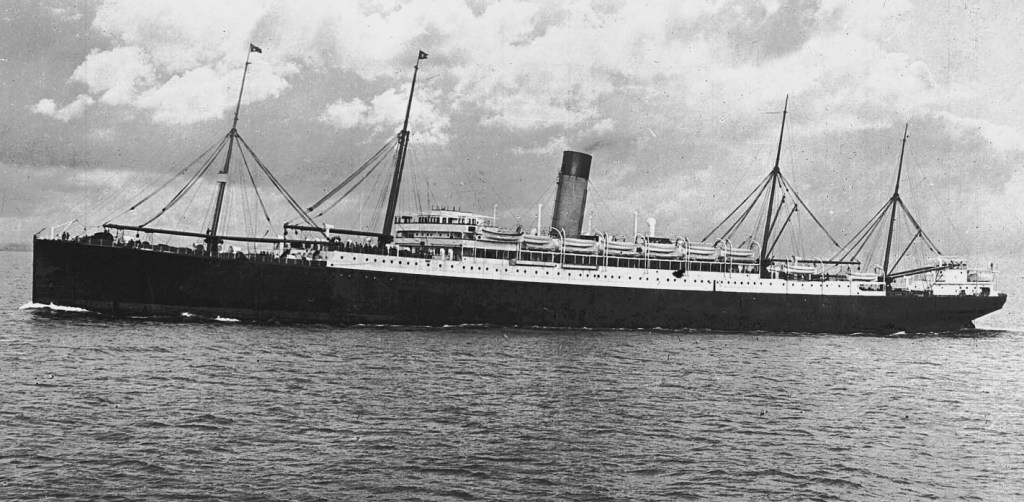
Samuel J. Hood Studio Collection

Early in December 1942 an ageing ocean liner slipped quietly out of the protective embrace of convoy ON149 and charting an evasive course, steamed away, unescorted, for the South Atlantic.

A contemporary of the Titanic – under construction as that ship embarked on her maiden voyage – this was the last and by far the largest of the Jubilee Class of British ‘long ships’. Designed to retain something of the elegance that reflected an earlier age of sail she still had a turn of speed considered a sufficient match for the U-boats. Sufficient, at least, that the Admiralty felt justified in authorising, perhaps demanding, a mixed complement of passengers both military and civilian.

Amongst the official count of 656 on board – crew, medics, families, children and combatants was one Captain William Logan Foster, a Merchant Navy Master with the Bibby Line. He was travelling as a passenger with an expectation of further instructions from the company’s agents. His recorded destination was Cape Town and it was understood he was to be taking command of a hospital ship.

Those instructions were never collected. On the evening of 6th December the first of several torpedoes was released by U-515.  After taking a further two hits, the SS Ceramic was disabled but remained afloat. Despite worsening weather passengers were disembarked to life boats. Sometime later two more torpedoes were to sink the vessel. The following day U-515 was ordered to return to the scene to take the Master for questioning. Kapitänleutnant Werner Henke surfaced, surveyed the scene and recovered just one survivor for the records. Then every single remaining soul was left to perish as Henke submerged beneath the freezing waves with all lifeboats and rafts to be swamped and capsized, engulfed by the mounting storm.

Accounts vary; some have the submariners machine-gunning survivors in the water as they cried for help or repelling and throwing back those that managed to cling to the submarine’s hull. Others talk of a far greater number of lost lives. Propaganda and the need to manage morale played their part and official acknowledgement was delayed for weeks. In fact there were virtually no first hand accounts.               

At a gathering some twenty years ago a few remaining crew members of U-515 were persuaded to talk. One had been on the bridge and reluctantly recalled events that even after sixty years left an emotional scar. Mountainous seas; the realisation there had been passengers on board; lifeboats flooded by waves, one with a woman holding a baby. . .  Another wrote of the return; “cruising at half speed, sometimes faster” and the “terrible sight – lifeboats, wreckage and people”. 

But what of the Kapitänleutnant? For an outstanding exponent of maritime carnage this was a prize – nearly twenty thousand tonnes to the tally. The U-boat commander with his hand picked crew, a roaming predator on a long leash; unseen, free of supervision; a competitive personal narrative in seeking and sinking tonnage largely untouched by incidental consequence. How did he feel when  he surfaced amongst the desperate human detritus and was forced to confront the terrible evidence and harrowing extent of his handiwork?

In April ’44, U-515 was forced to the surface and Henke and most of his crew taken and held on the USS Guadalcanal. Subsequently he was incarcerated at a camp near Washington DC. Whilst there, in June of that year, he walked to the wire and started climbing, ignored calls to stop and was shot dead. It is suggested that, anticipating imminent defeat, he feared prosecution by the British for war crimes. This was effectively a suicide. The motive, though, remains speculation; lost with a mind that had felt compelled to execute acts that most would regard as cruel and abhorrent.

How is it that with centuries of insight, curiosity and creativity we still fail to manage those destructive instincts and conduct that only serves to visit anguish on our fellow humans? A wealth of understanding that seems to convey little other than the privilege of knowing witness to our own follies.

In the mid twentieth century, in part informed by the Nuremburg trials, there was a period in which various studies and experiments sought to better understand just how humans could be induced to inflict such abuse. The Milgram experiment (obedience) and the Asch experiment (conformity) both illuminated a compromised autonomy.

When at Christmas 1914 men emerged briefly from their trenches to sing carols, play games and share their common humanity; why did they then return to resume the mutual slaughter?

Why does a lawyer who likes to portrays himself as a dedicated family man with a love of outdoor activities with wife and children choose, and with no other justification than the demands of his client, to proceed with callous indifference for the family life of others and to casually blight the formative years of someone else’s child?

We tend towards a resignation to specious inevitability – “C’est la guerre”. But that’s no more than observation; it’s the refuge of those reluctant to question convention or acknowledge unpalatable choice.   

These (matters) are incredibly stressful (but) little I can say or do”; – the response when the CEO of a complaints body is confronted with the intellectual inadequacies and logical fallacies characterising their determinations. Or the dismissive shrug; “it’s the best we have” to the shortcomings in another service. But in both the incapacity resides with the respondent, not with the challenge.

Too often those in a position to make a difference, to hold institutions to account, are ready with spurious sympathy but offer no more than signposts around the status quo. Too few care to upset an orthodoxy that rewards with a starring role. Theirs is a commitment that abdicates personal responsibility to a beguiling narrative. Protocol, procedure and selective rationale will furnish the authority for failure, and inadequacy.

In a sense we’re all victims, trapped in our personal realities. We wear an identity born of genetic predisposition and early conditioning, sustained in playing a part borne by opportunity and circumstance. And it’s so much easier to stick to the script – for many the only realistic option. I don’t suppose those poor individuals lost in the mud and filth of the first world war felt they had much choice. The script was a given – play the part or risk the opprobrium of cowardice and suffer the consequences of desertion. So do your duty; lay waste to the fellow man with whom you held no animosity and cling to the narrative that applies a balm of legitimacy. But don’t look too closely – the tin might be quite empty.

Of course there will be those who find opportunity offers a role well suited to their particular disposition. For some, founding experience can generate a sense of insecurity, inadequacy or resentment. These individuals might seek solace in abuse and domination or an assumed superiority. They aspire to a position that sustains their fragile internal masquerade. But the singular dialogue with an inescapable external reality is vulnerable. Circumstances change, the fiction becomes unsustainable  – for some a blessed relief, an opportunity for a rewrite; but for many an unbridgeable chasm will open.

Little wonder there can be such reluctance to relinquish the delusional narrative – a curated reality with complicit disregard for less amenable facts. It is this reassuring charade that justifies and absolves and serves to reduce contingent trauma to mere incidental inevitability.

So what of Werner Henke? It was suggested that he nursed a hatred for the British; another report that upon returning to the scene he was upset at the sight that greeted him. But whatever brought him there, his end for sure found him trapped in a narrative that now knew no other viable conclusion.

And what of the lawyer and his dedication to family life? Well that’s his family life; in his story you’re just a target, fodder for the fee. In his story you play no other part.

But why should we suffer the ignominy of a demeaning bit part in someone else’s drama; collateral to someone else’s adventure? However enlightened, the imposed narrative will militate against equitable coexistence. The shrug of resigned inevitability doesn’t cut it; there are always choices. The democratic ideal demands collaboration in the plot, true dialogue, all to hear and be heard. It’s a fragile ideal, it demands vigilance and protection from the malign monologue. The pathology spreads and thrives on blind indifference and self interest.

 .

————————————————————————————————————————

Just a footnote.

I’m not sure what prompted me to revisit the Ceramic incident. I never met Captain Foster – my parents were awaiting the end of the war to start a family. But my grandfather’s existence was a tangible presence in those early years.  

My mother’s childhood home seemed to retain something – a lingering suggestion of far-off and exotic places in a world once so much wider.

Artefacts and furnishings made in what was Burma and Ceylon and brought home in the hold.

An elaborate old wireless set with an image of the globe kept in the dining room.

And there were the photos; images from another age: Shipboard visits from family and friends. Officers in tropical whites. The photo that never left my mother’s bedside.

And there are passenger lists and shipboard guides from colonial days. There’s the telegram posted to “Care Steelship Rangoon” in a 1936 announcement of my mother’s “highest matriculation”.   

And there’s my grandfather’s last letter to his daughter as he boarded the Ceramic, the date punched out by the wartime censor.

All building a collective memory that contributed equally to a growing sense of self as any lived recall.

 The war wasn’t spoken of in those days and I grew up with just the sketchiest knowledge and passing reference to the torpedo attack. It’s only very recently that I sought out the details and I have been taken by surprise at their emotional and very personal impact.

It’s painful to read; I find myself willing the Ceramic to make another evasive turn, the storm to abate, or for Henke to save the last two torpedoes and disable but leave a graceful old vessel afloat. Just to show some compassion; children, babies, mothers, fathers, grandparents; the whole panoply of human existence condemned to a desperate end. All that life; the joys, the intimacies; all those possible futures miserably extinguished for a trophy. A tragedy that feels distressingly close.

In the past I may have been somewhat dismissive of the effect of collective memory. I’ve been tempted to characterise actions designed to assuage historical hurt as empty political gesture. And doubtless there will be gestures, but it now feels inescapable that our sense of being transcends the confines of first hand experience. Our roots run far more deeply; they’re sustained on the resonance of countless fleeting moments.

Latitude 40 deg. 30 min. N. // Longitude 40 deg. 20 min W.

Crossing boundaries

Photo by Rod Long on Unsplash

I fear it takes a long time to overcome early conditioning. Although I have long since removed myself from the influence of Catholicism and the Jesuits, that nagging imperative to seek fulfilment in placing the needs of others ahead of my own remains deep rooted. I suspect I may never be entirely free of the internal conflict and guilt that can come from attempting (and failing) to reconcile the perceived demands and expectations of others with one’s own needs.

I suppose this is an area of dissonance addressed by the notion of personal boundaries; a concept with which I have previously had little familiarity. Recently, though, I’ve become increasingly aware that establishing and maintaining these boundaries is essential in protecting a core sense of self-worth and identity. So this is a post about boundaries; both personal and physical; for each should offer a place of safety, and violation of either constitutes an act of emotional violence. And I trust any reader might bear with my returning to specific events here, since it is only in speaking of objective facts that the validity of my perceptions may emerge.

In all of this it has been impossible to ignore the resonance of ongoing events in the US which so clearly demonstrate the impact of an extreme pathology. Just the other day I watched the address by Gabriel Sterling, election officer for the State of Georgia. This man was angry and despairing almost beyond words:

“It’s got to stop!” he repeated over and over:

“It’s got to stop!”

This wasn’t a partisan diatribe – the man votes Republican; it was a cry for an end to the bullying threats and obscene invective that now characterises the unsubstantiated resistance to the current election outcome. We’re all entitled to our views and to press and argue them with reason and evidence. We cross boundaries though when we seek to impose these through violence and abuse.

And he was addressing more than the perpetrators. From the President down, all those who seek to lead but choose to look the other way and say nothing, with their silence, collude in the abuse. Theirs is the tacit approval of the bystander. “Not getting involved”; “not taking sides”; “non-judgmental”; and so it goes – but for any victim neutrality is a betrayal, a complicit sanction of mistreatment.

So I wonder why you might prefer to overlook objective facts and evidence and cling to a more convenient narrative? Fear of encountering a disconcerting reality? comfort in the reassuring consensus? a reluctance to entertain “the discomfort of thought”? All convenient pleas in the evasion of responsibility. But there again, why should you feel responsible?

It can be handy to find scapegoats; so much easier to place the blame with those that don’t quite fit in; the “others”. And there are always those quite skilled in diverting attention in that direction. There was a time when these awkward individuals might even be popped in a ducking stool for a “just” dispatch. And pity the poor woman (it would have been so); her boundaries, even her life, a forfeit to indifferent expedience. We’re all responsible for the world we inhabit; silence, whatever the reason, just enables. We don’t necessarily get what we ask for but we will get that which we don’t challenge.

Lawyers are experts in transgressing boundaries. It’s their stock in trade. Departure from the accepted standards of decent discourse to shock, humiliate and alarm. A process of softening up to facilitate the imposition of their clients’ demands. Flaunting an air of assumed authority and with an intimidating formality they go to work. A letter is despatched with absolutely no regard for the reality of underlying issues or for any potential consequences of their actions. Out of the blue the victim is assaulted:

Our analysis of your title supported by. . . clearly shows (the location of a boundary).

It is advised that proceedings are now to be raised in the Sheriff Court and ‘Court papers’ are to be served.

It is further advised that a new fence will be erected which shall run along the correct boundary line and any attempt to impede will be met by interim interdict

The next paragraph identifies a further encroachment of 58m2 at a different boundary also to be addressed as part of imminent court action. An order ad factum praestandum is to be sought. .

To one who wished only for complete legitimacy the above was shocking. The threat of imminent legal action horrified. Extensive correspondence and consultation with Registers of Scotland had previously secured definitive advice regarding the proper location of all boundaries according to the title. Steps had been taken to ensure full compliance. A copy of the Registers’ email confirming precise dimensions had been forwarded to neighbour and lawyer. Despite this, alternative locations were now to be imposed on pain of frightening legal process.

Worse was to follow. Several paragraphs now outlined allegations of behaviour perceived to be pathetic and infantile and which must stop now (bold,underlined). This included; shouting, waving arms, car horns. amongst other things and general intimidation each and every time the clients seek to assert their ownership rights. An astounding fabrication cast with demeaning intent, and it didn’t stop there:

Failing an undertaking by return of post, to immediately cease and desist, the court would be approached to grant an interim interdict with a power of arrest.

To someone who wouldn’t dream of conducting themselves in anything other than a responsible and decent fashion, this was beyond belief and a deeply traumatising assault.

But this is the “softening up”. Threats of arrest, of legal action on a scale beyond contemplation – all designed to terrorise into compliance. Perpetrated with a complete indifference for any facts, for any emotional or psychological injury, for any accepted standards of social interaction.

Experts in crossing boundaries; yet if you were to complain to any authority you would simply be advised to get a lawyer to send a return letter – remember, the power to intimidate is a “key part of a lawyer’s armoury”. It would be different if the injury was physical – broken bones or bruises are so much more visible – no return match here; but it’s the emotional trauma that will persist.

We have allowed this uncouth, bullying behaviour by the legal profession to become normalised. There are those who seem to feel an entitlement to violate boundaries; for a fee they will savage anyone in the service of a client’s whim. And it’s an unholy alliance; the client will excuse themselves of any responsibility for the practitioner’s techniques, the lawyer will claim to be legitimately following instructions. But this is an abuse of power and an abuse of the judicial process and the harm extends beyond the intended victim to us all by discrediting the legal system and thus denying an essential component of civilised life.

I do wonder what sort of individual can justify to themselves their deliberate abuse of complete strangers with no concern as to the wrongs or harm inflicted. Their “right” to take the client’s word at face value is no other than a self-proclaimed bully’s charter. Little wonder there is recognition of an above average display of psychopathic behaviour within the profession. Wrongful accusation, especially delivered with public dissemination and specious but alarming formality, strikes and wounds deep into the psyche. Those mercenaries that make a living out of the practice do us all a disservice.

Of course the lawyer didn’t offer any evidence in support of his lurid and unfounded allegations of intimidation but there is certainly that which will attest to his clients’ aggressive transgressions. Perhaps with more significance (and objective fact), I can conclusively address the ridiculous claims in regard to the location of boundaries, and here I will go into some detail regarding their definition within a Scottish Registered Title. Initially, though, there is a clear and overriding logical deficit informing the lawyer’s actions.

In response to a request, the lawyer had stated that the concern lay with the interpretation of the Land Certificates. A definitive interpretation had already been sought from, and provided by, the Registers of Scotland. The claims and threats of legal action were intended to impose an alternative interpretation.

This is a logically defective position. The 2012 act placed a statutory duty on the Keeper of the Registers to define the boundaries to every registered plot. The plan attached to the Land Certificate simply manifests the fulfilment of that obligation. Any interpretation which departs from the Keeper’s determination will necessarily cease to be representative of the title. Anyone (including the Sheriff) may interpret a document as they see fit, but it will only serve to define the boundaries to a Registered Title in so much as it represents the Keeper’s discharge of her statutory duty. To declare otherwise is a logical absurdity.

For clarity I do, of course, acknowledge the right to challenge the Keeper’s determination but that is a different matter and this lawyer’s cruel violations remain completely groundless; merely a testament to barbaric incompetence and dishonesty. There’s a grim irony in that it is the practitioners within the justice system that are so well placed to subvert justice.

The woman had bought her home in good faith, and when a new neighbour arrived and challenged her boundaries she sought only legitimacy and to continue with her quiet life. She had no ambitions regarding the exact extent of her plot and consulted at length with the Registers wishing only to ensure compliance with her title.

As a consequence her boundaries have been literally trampled. She awoke one morning to find her garden fence being removed. She has been subject to a so-called ‘chartered surveyor’ accompanied by her neighbour entering onto her property, without warning, in the course of measuring all her boundaries. She has been threatened by a revving engine and forced onto the grass verge. She has had telephoto images taken of her in her garden posted on social media with derogatory comments. And she has suffered the emotional injury and material loss occasioned by this outrageous and baseless legal onslaught.

These are just a few instances from an ongoing litany of incidents which, in a further attempt to socially isolate, have been extended to legal threat and false accusation against those that have offered support.

It had been my intention to conclude this post with some detail regarding the methodology employed by the Registers of Scotland in defining boundaries. The aspirations informing the 2012 act may have been laudable in this respect but the implementation has its shortcomings. There are, however, certain principles and conventions designed to overcome any limitations. Unfortunately this lawyer not only flew in the face of an overriding logical imperative but also demonstrated a wanton and incoherent neglect of these principles too. One example (the ‘red edge’) was illustrated in an earlier post.

However, I’m anxious that these pieces remain elevated above some sort of personal vendetta – there are important issues at stake and recent years have revealed an apparent and alarming decline of integrity in public life. I’ve no taste for conflict, especially when there is so much more on offer than wading through the backwash of those constantly navigating an advantage. So I’ll return to this topic later but having witnessed such cruel mistreatment and abuse of power at first hand; felt the shock, the despair; I’m not about to look the other way.

As always I maintain the view that robust, equitable and accountable institutions are our best protection from the excesses of the human temperament. There’s a need for vigilance and a crucial need for diligence and rigour in the design and drafting of legislation. Loose ends are an invitation for certain professionals to unpick holes where reason and good intention leaks out and vermin can creep in.

I was told by a lawyer in rural Scotland that “there are lots of boundary disputes around here”. He didn’t seem too bothered – and I’m not too surprised. . In a subsequent post I’ll return to that aspect of the Registered Title; the methodology, principles and conventions and an underlying shortcoming – a loose end that needs attention.

Meanwhile I’ll close with a quote from her book (Trauma and Recovery) by Judith Herman M.D.

“All the perpetrator asks is that the bystander do nothing. He appeals to the universal desire to see, hear, and speak no evil. The victim, on the contrary, asks the bystander to share the burden of pain. The victim demands action, engagement, and remembering. . .”

Following Procedure

Photo by Judith Prins on Unsplash

Art Garfunkle brought me a line from “Waters of March” (Jobim). It conjured an image now preserved in an enduring memory of a particular place and time.

Early one sultry summer morning, some fifty years ago in up-state Mississippi, a young man with a back-pack climbed down from a Greyhound Scenicruiser. . .  There’s no one else around; the door closes, the diesel churns, fades into the distance and folds into silence; the dust settles, the air’s close and heavy. Some short way ahead a heavily loaded pickup emerges from a road on the left, the driver’s sleeve rolled up, arm resting on the door. It pauses then, with an easy muffled rumble, slowly crosses and is gone. Round the bend on a cinder patch a couple of trucks and a patrol car are scattered in front of a diner. The young fellow takes his place at the counter, sips the coffee and keeps himself to himself. And that’s all; I don’t remember what may have followed but those images are burned in and that pickup remains forever my “truckload of bricks in the soft morning light”.

The memory is still clear and comforting; the warm glow of clay in the early morning sunshine, the quiet easing in of a new day, a small moment from an older America retained and fondly revisited. But not that long ago I realised there was a flaw. The driver’s arm rests on the right hand door.

Yes, I stepped off that bus, sat in the diner, felt the early morning calm as the truck passed by but maybe not just then and there. My “memory” had been assigned its narrative by a subconscious with a partisan indifference for detail – we drive on the left in England.

I’m not about to relinquish the recollection – I couldn’t if I wanted to and I don’t want to. But it’s not a reliable evocation – they don’t drive on the left in Mississippi. That’s the issue; we humans seem to be defined by an uneasy tension between a more or less rational conscious self and the less biddable subconscious.

It’s that freewheeling autopilot that gets us into trouble but without it we would neither function nor know ourselves. Accommodating the dichotomy is the challenge. The inaccessible self does the housekeeping, spins the memories and holds a sense of identity with assumption and bias resistant to critical exposure. The rational party can make for an uncompromising partner but it’s in the extent to which the one accommodates the other and in negotiating this pact that we find ourselves.

Unfortunately though, it’s the unreliable accomplice that tends to call the tune with reason often relegated to no more than supportive rhetoric. Thomas Paine likened  “arguing with a man who has renounced reason” to “administering medicine to the dead”. A couple of centuries later Kennedy spoke of the “myth” and “prefabricated set of interpretations” with which we “enjoy the comfort of opinion without the discomfort of thought”. Hardly surprising since reason, in challenging beliefs, can erode a vital sense of self – witness those lying in hospital beds, on a ventilator, but still in denial as to the source of their predicament,

And of course there might be considered a certain irony in the Kennedy aphorism – he identified as a Catholic after all and I speak from some experience. My education was, for a while, consigned to the Jesuits – although their dogmatic indoctrination ensured that they didn’t retain the man. . .

There’s no knowing the extent to which his Catholicism may have informed Kennedy’s presidency but this does serve to illuminate the apparent disjunction which burdens all endeavour. I’m not about to scrap my truckload of bricks but I’ll keep it parked up in the background. It’s part of the flavour and nuance that characterises my existence. But it’s in the accountable rationale that we’re offered an  insurance against the vagaries of arbitrary conditioning. Here is the common currency that brings an opportunity for universality. The insight to contain and manage uncertain instinct. The tool to review investment in a dubious identity.

Behaviours run the gamut from a form of Socratic ideal with truth and purpose to be sought in rational inquiry and dialogue while, at the other extreme, lies a Trumpian disregard for any independent measure of integrity, with behaviours dictated by a pre-eminent commitment to a ragbag of capricious compulsions.

Mostly, though, we inhabit a hinterland of cultural norms, navigating a course between the two poles but largely “following procedure”. It’s safer and more comfortable to fit in. Undoubtedly procedure has its place but blind conformity, with a reluctance to challenge, hinders enlightenment and invites frustration and failure.

Some years ago I was living in a recently designated “conservation area”. The local authority embarked on a programme of replacing street furniture and surfaces with “heritage” products. Stone flags bedded in sand, granite setts in pitch for vehicular access with cobbles to line pedestrian ways. The work was beautifully executed by a small team. So it remained for several months before being ripped up to renew the water main with individual spurs replacing the lead to every property. The paving was subsequently reinstated with broken flags patched with cement, now missing flags replaced by tarmac and disturbed setts bedded in and daubed with slurry.

On that occasion I rang the Authority:

“I live in . . . , we’ve just had the water main renewed, how often does this happen?”

“Oh once every hundred years or so,” came the cheery reply.

“In that case, might it not have been an idea to investigate the possibility of any imminent works before the conservation improvements?”

Less cheery this time: “Who are you?”

“I’m a resident.”

“What’s your address?”

“I’m a resident.”

“What business is it of yours? We followed procedure.”

Somewhat defensive, a small matter and perhaps a simplistic illustration for a more pervasive ill. In a culture that likes to apportion blame and find scapegoats, “following procedure” affords a tick-box discharge of responsibility. Permission to avoid the “discomfort of thought”.

The overseas visitor with a hire car, accustomed to driving on the right sets off on the wrong side, or maybe looks the wrong way at a junction, and causes an accident. I doubt there are many who, in driving abroad, have not made a similar error. Much of the responsibility is necessarily left to a subconscious conditioned to driving on a particular side. Accepting that there might be additional factors  to consider it seems otherwise short sighted to attempt to wrap things up with just the inevitable motoring conviction. We both expect too much of that errant self and aren’t really addressing the issue.

Far better to acknowledge the limits of human behaviour. It would take little to require all vehicles hired to drivers from relevant countries be equipped with software that issued warnings at pinch points and when aberrant positioning was detected. I imagine most current vehicles would easily lend themselves to the necessary adjustments.

Human fallibility is part of the deal. The task is to recognise and accommodate; not pretend otherwise. To build and maintain institutions that are up to the task and hold them properly accountable and open to challenge. Then we might better manage that peculiar diversity of behaviours that makes us what we are. We’re all burdened with our personal collections of acquired prejudice, needs and drives and only through impartial rationality can we expect to accommodate the disparity and perhaps mitigate the impact of extreme encumbrance.

It is, therefore, particularly troubling when those institutions are seen to bend to the needs of the individual and functionaries neglect their duty to transcend the unreliable self. The politician more interested in party and career progression, the lawyer serving client success ahead of justice. Indeed, those who simply don’t have the capacity to acknowledge or investigate an inconvenient reality.

And here grows the frustration and disquiet that led me to embark on these ramblings. As I say, no expertise, just an attempt to develop some understanding and perhaps to find some catharsis. I take the view that any solution lies in a vigilant oversight of those mechanisms by which we regulate ourselves. Institutions designed and administered with true accountability, insight and compassion and an ability to see beyond the specious sanction of normality.

The fact is, though, that our capacity for rationality remains hopelessly encumbered by the familiar. Public discourse often affects a trade in reason whilst offering little other than a subtext to  pervasive predisposition. There’s a certain irony for example – and I’ve no axe to grind here – in that the purveyors of addictive substances can find their efforts recognised by anything from The Queen’s Award, to a vacation at Her Majesty’s Pleasure. . .

I’ve already touched briefly on the apparent shortcomings within the provision for civil justice. In my next post I shall address another area, probably of interest to many, that seems to labour under a notable shortfall of sensible reflection.

A Sense of Decency

Photo by Martin Schmidli on Unsplash

“It’s no good just being a decent fellow; you’ve got to sell yourself in this world”. So said the careers master somewhere back in the mid sixties. Understandable, I suppose, but it didn’t go down well. Doesn’t exactly denigrate but puts things in their place. A hierarchy was established and ever since I’ve lived with an uneasy circumspection regarding a word that seems to suggest naïve denial of the competitive reality.

But on the weekend of 7th November this little word was brandished in triumph and all it implies applauded world wide. Integrity; reason; truth; compassion; decency apparently does matter to many. With a tangible sense of relief it feels as if we’re emerging from a brief darkness. The most influential office in the world is being returned to its rightful owners. The citizens are removing the oxygen mask – therapy for a destructive pathology.

Anyone with close experience of malignant narcissism or psychopathy will be only too familiar with the symptoms. The chaotic irrationality; victim blaming; gaslighting; mendacity; all imposed without conscience and all compounded by the failure of so many to see. The constant demands for validation; the sad little voice masquerading as victim; the bewildering capacity to pedal incoherent false narrative untroubled by evidence; all so uncannily recognisable.

There’s a very personal resonance in all of this, so exactly reflected in the abuse suffered by my friend and still so triggering. The traits are identical; predictable even down to the misappropriation of a justice system; recourse to a legal community populated by an infinitely adjustable morality suited to any occasion or pocket. There are no curbs; all are quite dispensable in the service of the damaged ego.

Driven on by gnawing insecurities and relieved of ethical restraint these individuals can prevail, with apparent success lending an ability to recruit enablers – a trump card in vindicating their dysfunctional reality. Look away from the ridiculous creature strutting insanities on that old grainy footage and see the swaggering uniforms that sought to profit from the mayhem and the serried ranks of goose-stepping conformists unwilling to challenge and don’t forget all those who simply choose not to see. There’s a comforting identity on offer to all – from acolyte to bystander – who will sustain and reward without question.

And there’s the problem. These disturbed characters thrive on a prosocial reluctance to call out the disorder. How often has the recent incumbent been characterised as an “unconventional politician”? But the motorist who creates mayhem by persistently driving under the influence and without regard for speed limits doesn’t escape censure as merely an “unconventional driver”. The dangerous driver may arrive sooner, maybe even with the passengers still intact but leaves a trail. Theirs is a self-serving and malign influence; no template for enduring coexistence.

The difficulty with so many stems from a bizarre charismatic appeal. It generates an emotional bond  impervious to reasonable challenge. Behaviour which otherwise would earn astonished disbelief is endorsed, normalised. We become inured to dysfunction. The only defence is to try and see things as they are, to think the unthinkable and expect the unexpected. We must seek and cling to objective truths and maintain and reinforce robust and equitable institutions. One of which, incidentally, seems to be undergoing a test – in progress right now.

I’m certainly not well versed in the jargon or theory but representative democracy appears to have some vulnerabilities. In a sense it effects a formalised agreement to differ but is less kind to minorities. When consensus straddles a knife edge, authority lies open to the taking. “The nation has spoken”; so says the politician savouring a fractional margin as a mandate to impose on the other half. Popular representation is laudable but compromised when all complexities are reduced to a zero-sum binary. This is particularly the case when referenda seek to pre-empt rational analysis of any tedious detail. At this point you’re being sold on the packaging, which I think brings me back to the opening admonishment.

We’ve become too accustomed to superficial and beguiling hyperbole. Never mind the policies, we can come up with those later, it’s the campaign that matters; you’ve got to sell yourself. But by embracing the hype, by suspending thought, we risk squandering a priceless privilege. It exposes the vulnerabilities of the popular vote. It would only take the slightest majority to lose that privilege to tyranny. Perhaps the greatest danger is a false sense of security and complacent inertia. Without vigilance our democratic freedoms fall prey to those seeking traction for their affliction.

I have no political allegiance here but, speaking for myself and despite all of the above, this weekend seemed to reset the priorities. Whatever now ensues, the window’s been opened on a clear and extensive embrace of something more valued, more fundamental than frenetic posturing. I felt the reassurance spread far beyond the shores of the US. So maybe it’s not such a foolish belief, perhaps I needn’t excuse myself for believing in decency and placing it above profit, power and the hard sell.

Compulsory Games

Photo by Tanner Yould on Unsplash

Apparently the latest iteration of “Monopoly” has gone cashless. This has prompted a view that the more visceral pleasure of relieving opponents of large wads of notes will now be lost. Quite possibly true but, however played, this is just a passing schadenfreude if the defeat is sufficient to remove the remaining players. A pyrrhic dimension in thus ending the game; adjusting the rules to prolong play is not unknown.

I seem to think I was brought up with the adage that how you played the game was more important than winning or losing. I believe the view was promoted by one Grantland Rice in the early forties and doesn’t seem to find much favour these days. I suspect there’s an element of misinterpretation – what is intended by ‘important’? After all most games are expected to conclude in victory or defeat.

The competitive instinct is a driving force, the adrenalin rush an essential component of survival. The compulsion to strive for success, to excel, appears positive, constructive, and can promote progress. But unrestrained there await less beneficial manifestations and it’s difficult to disregard the need for effective institutions in combating these more destructive excesses.

Competition drives the development of essential drugs, a surfeit of foodstuffs – the means of survival for all – but the same imperative controls access. Artworks secured in vaults; creativity concealed behind copyright; rainforests decimated; covert software designed to defeat emission controls; an overabundance of manufactured goods; all ultimately impoverishing or harmful and self defeating. So much activity to satisfy the competitive ambition.

It’s a sad irony that as we gain proficiency in developing the technical means to cure, to feed, to shelter, the same ingenuity doesn’t extend to establishing more inclusive socio-economic mechanisms. A failure to collaborate in channelling competitive gain distributes disparity and rations advantage.

Meritocracy theoretically comes with a level playing field but sets its own agendas. Any reluctance to compete or departure from the successful ideal risks stigma.  It promotes conformity and attendant anxieties, makes of us winners and losers, discounts diversity and legitimises unwarranted inequalities.

And now the competitive clamour has become overwhelming. A rash of nationalistic hubris and insularity as the world gets ever smaller. Cries for independence and sovereignty – supremacy even – when we’ve never been more interdependent. We’re to make ourselves “great again”, our  endeavours to be “world beating”. . . 

But I’m straying – the issue being that those institutions which govern our lives are inevitably reflective of the greater society and a justice system holds an intimate and core relationship. Ours is founded on competitive principles and, by all accounts, adversarial justice provides a ready home for many practitioners of a pugnacious disposition. Addressing some consequences of this relationship is my topic here.

                                               ———————————-

The expanded time offered by lock-down earlier in the year, with days relieved of so many routine pressures, was an ideal opportunity to catch up on reading. The Secret Barrister had been languishing on my bedside table for months and now afforded valuable insight into some of the issues that were troubling me.

The writer, of course, is concerned with the criminal justice system of which (thankfully) I have no experience. Even so, as an uninformed onlooker it’s tempting to comment on the apparent failings – particularly after listening to a recent interview with Chris Daw QC (Justice on Trial). Unfortunately civil justice shares the same adversarial culture and although burdens of proof may be diminished, outcomes are informed by the same combative principles.

Indeed I wonder why it’s felt appropriate to taint the resolution of interpersonal difference with such proximity to the oppressive mechanisms and sanctions employed in the management of illegality. To those entirely innocent of any criminal tendency the perceived threats and implied opprobrium can be effective inducements; simply further encouragement to capitulate to competitive pressure. This is a challenging arena in which to find equitable resolution to the complexity and nuance which characterises most of life.

Essentially the book reassured with a display of sensitivity and perception from within a system which can more often appear intent on simply keeping those who don’t conform out of sight. I was interested to note the comments on logical fallacy and other fallibilities exhibited by lay officials. This struck a chord, for experience would suggest that such shortcomings are not confined to those individuals. A particular frustration is generated by the incoherent and logically deficient arguments with which so many seek to press a competitive advantage or just cling to dubious orthodoxy.

Perhaps of most relevance, though, were the chapters comparing the adversarial and inquisitorial systems of justice. A balanced discussion appearing to move in favour of an inquisitorial approach but eventually concluded with a pragmatic “least bad” option. Put crudely: all systems fail but the safer risk of false conviction within the adversarial was to be preferred (if I read correctly).

Hardly unreasonable but disappointing not to strive for better – though I don’t suppose I’m in a position to judge. However there is, to my mind, a fatal flaw in any system which allows practitioners to legitimately disregard information, unhelpful to their client’s case, but capable of contributing to a just outcome and which has been overlooked by the opposition. In other words the competitive imperative ultimately trumps any search for an authentic truth.

This is a principle that spills over into civil litigation and finds an uncertain moral imperative in the lawyer’s ‘balance of duties’. The pre-eminence of the rule of law apparently, to the less scrupulous litigator, little other than a hurdle in securing the client’s (and their) success.

The Scottish Legal Complaints Commission (SLCC) are clear in their notes of advice: Practitioners are entitled to accept what their clients have told them at face value, unless they know that the information is false. There is no obligation on them to check the information provided. They even feel the need to reinforce the view: As mentioned above, practitioners are entitled to accept what their clients have told them at face value. All it takes is a little partisan myopia then the lawyer can get to work.     

The letter that arrived one afternoon in 2017 was utterly shocking. To a quiet retiring woman in late middle age who wouldn’t dream of behaving inappropriately or with other than complete legitimacy the effect was traumatising. The first reaction was disbelief: demeaning admonishments; peremptory demands; extraordinary and entirely unfounded allegations with the threat of criminal and financial sanctions. The trauma has never healed.

In the course of ensuing events I was informed by one lawyer that “it’s a game you know”. Well it’s a game with unwilling contenders dragged into a playground with arcane rules and no grown-ups on duty; nowhere else to turn; no option than to participate or capitulate.

The law holds ultimate dominion and in handing the administration and privileged access to legal professionals we underwrite an assumed authority and imbue an expectation of deference that some seem to regard as a right to abuse and humiliate. All in the service of a client’s demands.

The letter was followed by a fruitless exchange of correspondence and subsequently the writ as mentioned in a previous post where I touched on the bizarrely incompetent interpretation of a title “properly construed”. Just one example from a compendium of incoherence, sophistry and known misrepresentation. But now, as another lawyer noted, “the clock was ticking” and “they got in first”. The game was in play.

On the face of things it might seem unwise to proceed matters with such extensive falsification but in reality I doubt there was any expectation of real scrutiny. Compliance was a forgone; the woman submitted to the demands – she had neither the emotional resilience nor financial means to do otherwise. Furthermore there is clearly little fear of deterrence from a regulatory gatekeeper with an equal disdain for logical rigour and a convenient facility for misinterpretation. The performance of SLCC demands a post to itself and one will follow.

This however is litigation in action and certainly not a search for equitable resolution or authenticity. The dispute is removed to an arena darkened by association with criminality and the portent of severe censure. Here (if you can afford) proxy combatants extract an outcome according to abstruse precept and procedure. This is the world of civil justice.

Want to cover up some flaky activity or misbehaviour? Get yourself an NDA! You find the letter offensive and upsetting? Just get a lawyer to send a nastier one back! Begrudge your neighbour? You know what to do. . .  Truth and facts an irrelevance; courtesy and understanding have no place here; it’s all about conquest and defeat. Just find yourself a better bruiser. . .

Placing equity at the mercy of adversarial contest seems all too characteristic of the prevailing determination to distil everything to a scramble for competitive edge. It is peculiarly suited to those – both practitioner and client – who thrive on conflict and seek success unhindered by reason or propriety.

There is a view that a functioning and accessible justice system is as important to the well being of a nation as is a viable health service. Instead of wringing our collective hands at the current state of mental health perhaps we should consider some of the contributory facts. Risk assessments are now mandatory for the most mundane activities yet legal procedure, in sanctioning onslaughts very likely to cause psychological harm, relieves the perpetrators of any obligation to even establish the validity of  facts or vulnerabilities of the target. This really is indefensible and an outrage in any supposedly enlightened society.

However dispute might arise, a sane and constructive response would seek resolution in informed investigation; instead we create a business opportunity for litigators. Accepting that any emerging evidence of criminality would attract appropriate action I see no other reason to drag unwilling participants into the adversarial arena. It seems reasonable to propose that any access to the courts be entirely subject to completion of a mandatory dispute resolution procedure. A failure to resolve here might authorise but could also inform any subsequent legal action. The initial process could be affordable, unthreatening, and essentially inquisitorial with professional representation restricted to an advisory capacity. This should inhibit any tendency for coercive threat or legal abuse and discourage frivolous, vexatious and bullying actions. It might consequently ease  pressure on the courts and most probably be less costly for all.

I understand that English procedure does provide for a pre-action protocol which anticipates some form of ADR. The observations here are drawn from my experience in Scotland where no such protocol is recognised. I was told  that you could commit your neighbour to court action if you just didn’t agree with the name given to his dog. .

The adversity business in misappropriating legal procedure to its own ends undermines justice. A provision on the lines suggested and universally applied to civil matters could go some way towards extending equitable and affordable access to remedy at law and, in resetting the rules, relieve an invidious game of its more barbaric practices.

A Hierarchy of Collusion

This is a version of my intended first post. A much condensed piece now, since I’ve already set out the stall and shall try to resist the temptation for cathartic but redundant repetition. It’s really quite a small matter – just an everyday story of the cultural disingenuity that seems evermore to infect our existence. It  does, however, serve to illustrate the extent to which we have become inured to behaviour that pursues advantage relieved of any need for reasonable grounds.

So this is it; written just before the pandemic struck.

Several months ago I received a substantial gas bill – no great surprise; the meter hadn’t been read for some time and I settled the account without concern. My curiosity, however, was aroused by a “replacement bill” which substituted fabricated estimates in place of the original billing history. I investigated and noted that a Supplier’s licence condition had been introduced some 18 months earlier in connection with the issue of “back bills”. The Supplier’s bill did not appear to comply with this mandatory condition and I telephoned the office; primarily just to throw light on the apparent discrepancy.

Up to a dozen phone conversations, emails and letters ensued. All was perfectly good humoured and cordial but substantially confused and incoherent. Indeed on my first telephone enquiry I was driven to ask whether the individual was being deliberately obtuse or simply didn’t understand my concern.

On more than one occasion I was told that the matter had now been resolved and the complaint would be closed. On another I was given to understand I would have to re-submit to move the complaint to another stage. There was an evident determination to disregard the significance of the licence condition with repeated recourse to a previous, but now superseded, voluntary code.

The principal intention appeared to be obfuscation, discouragement and delay but eventually, and with clear reluctance, a deadlock letter was issued. I was now entitled to approach the Ombudsman. Within a week of my submission and without further investigation the Supplier made an immediate credit adjustment to my account in excess of £1,000.

Although this offer now seemed to reflect proper compliance I remained concerned that an apparent attempt to mislead had  received no acknowledgement or explanation. I declined the proposal, considering it an inadequate response.

The Ombudsman duly investigated and upheld the complaint. The credit already applied was confirmed and a further credit demanded in recognition of a previous instance of non-compliance revealed through an analysis of account history. This was an item of which I was aware but had not seen fit to press. Finally an additional payment was sought as a gesture of goodwill in recognition of the shortfall in service and inconvenience caused and, perhaps more significantly, a written apology required. It was noted that the Ombudsman could not advise the company on matters of internal procedure since this was a business decision.

I was reassured – not so much by the outcome but by the rational and painstaking competence of the Ombudsman’s findings. I would have been equally satisfied if that same rigour had identified a flaw in my understanding and with a different result. I had been heard. I rang the service to establish the impact (if any) of the outcome. I was advised that findings were collated and results forwarded to Ofgem. I felt the Ombudsman service had fulfilled its role and accepted the outcome.

The remedies were actioned promptly – adjustments to the account, a goodwill payment. I missed the apology. I had hoped for a letter, perhaps some sort of explanation however minimal. In the event less than two lines were incorporated within a statement of action attached to the Ombudsman site – superficial and barely adequate. An apology recognising a shortfall in ‘customer service’ and inconvenience caused with an assurance that this wasn’t the level of service they aim to provide. No acknowledgement of culpability (the lawyers see to that), no proposals to address shortcomings.

Why do we indulge such disingenuous nonsense? This wasn’t a careless lapse, it was a consistent and deliberate attempt by several employees to mislead. The company employs procedures that can only serve to frustrate the observance of a mandatory licence condition. When challenged they dissemble until the last possible moment.

No doubt this is a business decision; more profitable to evade and pay the price when caught than to comply. More beneficial to the shareholders (of which, ironically, I am one) and the management’s remuneration packages. I wonder how many other customers are unwittingly contributing to the cause?

This is the routine dissimulation of which I speak. Not just a household name and one of our principal suppliers of essential infrastructure but all the individuals who spoke on the phone and placed their names on correspondence. All complicit in the deceit. I won’t speculate as to motivation – there’s a history of research into questionable compliance – but presumably the CEO, policy makers and lawyers are all aware but unconcerned that they profit from dishonesty?

Does it matter?  There seems to be no stigma – just a question of priorities and getting away with things. Truth may be a tricky call but deceit is a clear choice. Habitual deceit is corrosive; it erodes trust, it unpicks the fabric, alienates and undermines equitable coexistence. Opportunistic deceit may appear an effective strategy for certain individuals but surely a poor thesis for cooperation, mutual understanding and social cohesion?

Why so prevalent and unchallenged? Complacency; indifference; reluctance to question, to risk involvement, to acknowledge or perhaps realise personal jeopardy? All familiar hallmarks of the bystander and although possibly without malice their silence enables aberrant behaviour to become normalised.

It’s the deliberate deceit that most offends. If we lose the habit of thinking for ourselves and recognising the perils of moral delinquency we’re left only with institutions and regulatory mechanisms to guard against excess. On this occasion the Ombudsman service performed that role proficiently albeit with some uncertainty as to the ultimate effect. These mechanisms however are not universal, thus tending to lend a tacit legitimacy to behaviour that escapes dedicated provision. And anyway, how many others are misled and with what impact? How many defer to an assumed authority and never question the orthodoxy?

As I say, a small incident in itself, but it does demonstrate how so many can contribute to a hierarchy of collusion that maintains the myth. From those propounding the deceit in service of their needs, through the acolytes who detect benefit in extending a dogma, to those finding comfort in conformity and to those who simply look the other way. All confound the essential rationality underpinning a coherent society; all spread the contagion.

That’s about it, though I suppose in touching on the energy market there are other dimensions which might stand scrutiny at some point. I’ve always felt a certain resistance to those exhortations to “switch” and contribute to an industry that fulfils no real underlying need. We all need energy but the basic product remains the same regardless of supplier. Their commodity exists in providing a vehicle for competition. This may benefit some consumers but probably at the expense of others. Doubtless it’s profitable for “switchers” and “suppliers”. The upshot is that every bill for energy includes a element to fund an activity that is essentially superfluous to the delivery of vital infrastructure. An activity that generates its own needs and can seem to impart a certain shame on those forsaking an opportunity for virtuous contribution to the competitive milieu.

Undoubtedly a subjective impression and might be better to revisit some other time with more facts and figures! We’re a very busy people though, and we’re burning up our world in the process. It might prove helpful to curb those more redundant activities which ultimately offer little more than a platform for the exercise of competitive dominance.